
Regional anesthesia targets nerves in a particular region.
This type of anesthesia allows patients to remain awake (or lightly sedated) while still being pain-free in the area where surgery is performed.
Types of regional anesthesia :
1. Spinal Anesthesia : Injected into the spinal fluid in the lower back, it is commonly used for surgeries below the abdomen, such as cesarean sections or lower limb surgeries.
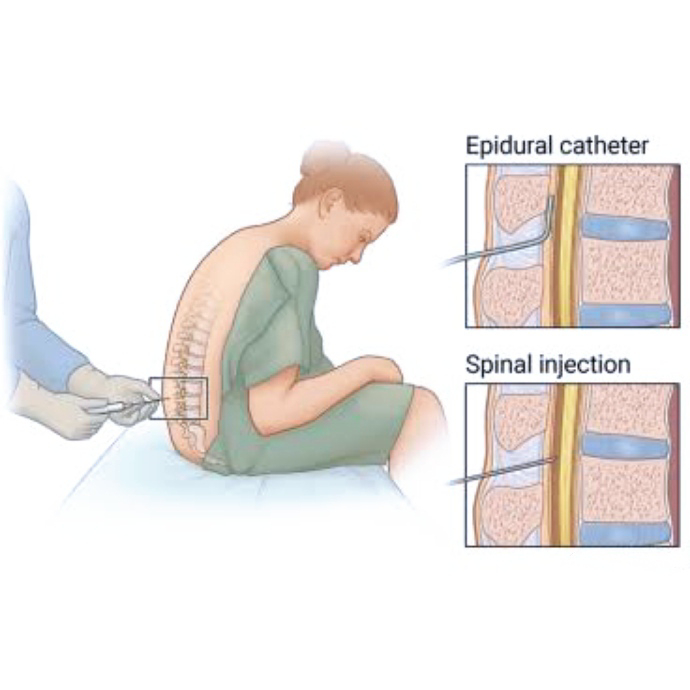
2. Epidural Anesthesia : Administered in the epidural space of the spine, it is often used during childbirth or surgeries involving the lower extremities. Epidurals can be continuously administered through a catheter.

3. Peripheral Nerve Blocks : This involves injecting anesthetic near specific nerves or nerve clusters to numb a particular area, such as an arm or leg.

Examples include brachial plexus blocks for arm surgeries or femoral nerve blocks for knee surgeries.
4.Intravenous Regional Anesthesia (Bier Block): An anesthetic is injected into a vein in a limb after blood flow has been restricted using a tourniquet, commonly used for short procedures on the arm or hand.

ADVANTAGES OF REGIONAL ANESTHESIA : Reduced need for opioids, faster recovery, and fewer systemic side effects compared to general anesthesia.
It may not be suitable for all patients or procedures, and the choice depends on various factors including patient health, type of surgery, and patient preference.


.jpeg)


0 Comments